
Treatments
Movement Re-Education
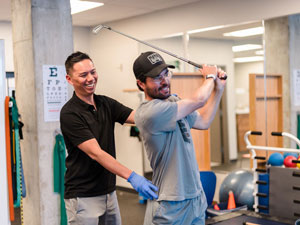
The amount of support your body has will change the amount of control your body needs to exert to maintain its position. Poor motor control can be the cause of injuries. This poor movement pattern is not optimal for maintaining healthy joints and balanced muscles, so over time, these muscles wear down. At Motion Stability we do a thorough assessment to determine what patterns of movement might be contributing to your injury, pain, or less than optimal performance. We then teach you how to correct these patterns so you can optimize your function and performance and decrease your pain.
Dry Needling
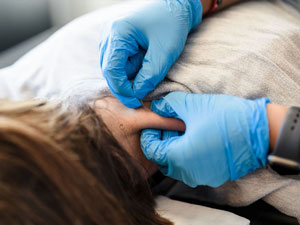
Dry needling is an invasive procedure in which a solid filament needle is inserted into the skin and muscle directly at a myofascial trigger point. Physical therapists utilize dry needling in the treatment of myofascial pain.
Sports-Specific Training
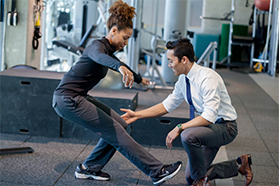
Oftentimes the patient is rehabilitated from their injury or pain state and then discharged. However, the patient has not been conditioned to return to their occupation or back to playing competitively or recreationally. Many times, the work or sport movements are what originally caused the problem in the first place. At Motion Stability we focus on returning the patient so that they are performing optimally for their sport or work to prevent re-injury.
Manual Therapy
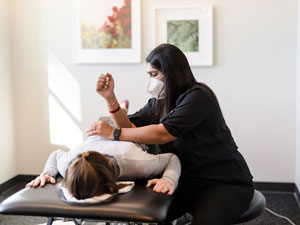
Manual therapy are hands on techniques used by our physical therapists to assess and treat movement dysfunction in the body. It includes a detailed assessment of the muscles, joints, fascia and nerves as well manually applied movement techniques such as joint mobilization, myofascial release, soft tissue mobilization and nerve mobilization to treat excessive and restricted movement. The therapists at Motion Stability have all taken post-graduate courses in orthopedic manual therapy.
Neurodynamics
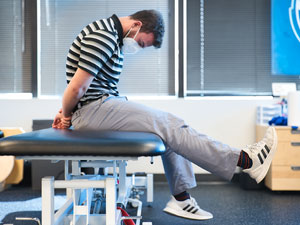
Therapists at Motion Stability are specially trained in using nerve mobilization called ‘neurodynamics’ as a treatment approach to address nerve related pain and injuries. Neurodynamics is the integration of the mechanics and physiology of the nervous system in the manual treatment of neuromusculoskeletal disorders.
Ultrasound Imaging
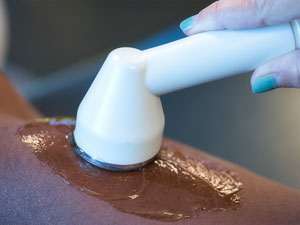
At Motion Stability, we use rehabilitative ultrasound imaging to visualize muscle control, especially muscles that are difficult to see from the superficial skin. Such muscles in core stability such as the transversus abdominis, multifidus, and pelvic floor are key in providing proper core stability. Ultrasound imaging provides feedback to the patient whether the proper muscle contraction is being performed.
Redcord
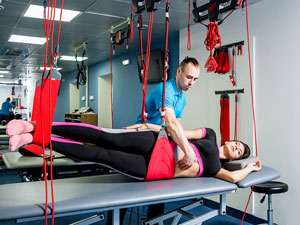
Redcord, also known as Neurac, is a system that originated in Norway. Redcord is designed to help patients with musculoskeletal pain regain normal function by using high levels of neuromuscular stimulation. This is accomplished by suspending the patient in a series of slings and bungees that offload weight and allow the therapist to perform manual therapy techniques and gradually increase weight-bearing exercises while reducing or eliminating pain.
Modalities
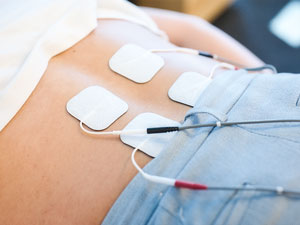
Given the right clinical presentation, the use of modalities such as electrical stimulation, ultrasound and other interventions are appropriate to calm pain, muscle guarding, and promote healing. Our physical therapists utilize modalities in the appropriate time of your pain presentation.
Taping
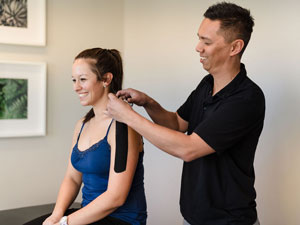
Motion Stability is trained in various taping techniques to help facilitate, inhibit, or support musculoskeletal conditions.
Cupping
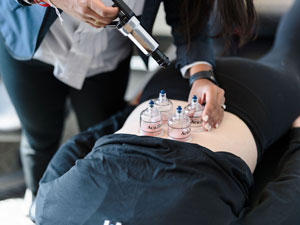
Cupping is used to create a suction on the skin allowing for increased circulation of blood flow to an area to and assits to ease pain and improve healing.